Who was Gerard Berger?
|
|
Biography
 His childhood
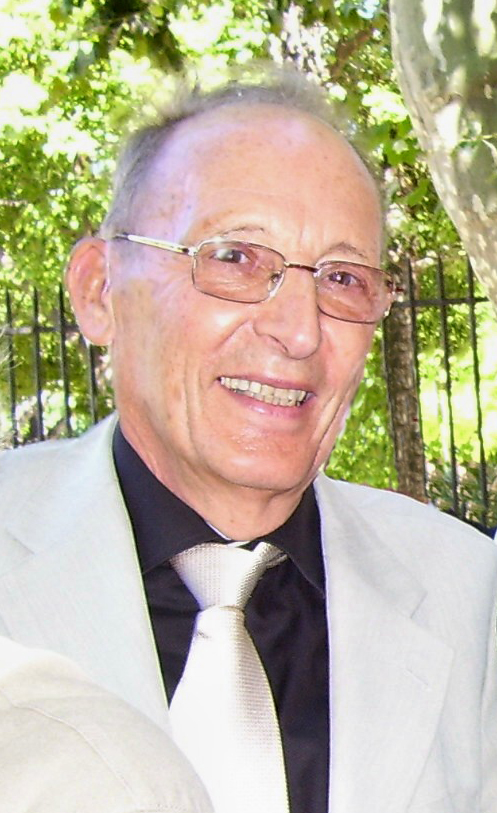
My husband, Gérard Berger, was born in Saint-Maurice in Val-de-Marne on June 7, 1938, to an accountant father and a milliner mother. The paternal family, lived in Maisons-Alfort in a pavilion near that of the maternal family rue des Marais. These marshes were practically at the foot of the houses and teeming with life. His grandfather fished there pike, carp and tench...
His father was mobilized in 1939 and taken prisoner in 1940. His mother and paternal grandmother worked. It was therefore Respin's maternal grandparents who took care of Gérard. His grandfather Joseph taught him to read. A carpenter by trade, he made wooden toys for him. Growing up, Gerard was very attracted to the marshes. With his friends he spent a lot of time chasing frogs, salamanders and various insects. His predilection for bugs and nature observation came from there. In the summer they went on holiday in Creuse where they visited the family but also went fishing in the Gartempe, a beautiful river full of fish.
He had no problem with school, he was doing well. At 10, he entered the 6th year of the Lycée Charlemagne in Paris; he continued his studies there until the Baccalauréat. That's when he became interested in science. He promised to work later on cancer and the structure of matter. His book "Le vide, l'énergie et la matière" was thus already in germ at that time. He was experimenting in the garden and house, buying chemicals at the local drugstore. This did not reassure either his parents or the neighbours, who saw plumes of smoke and explosions. He was lucky not to injure himself, which was not the case for some of the chemistry apprentices he knew.
The year 1954 ended in drama for Gerard and the whole family. Albert, his father, died in a moped accident. The situation changed, but the family got together so that Gerard could continue his studies.
His training

In 1955 he entered the Lycée Chaptal in Paris in preparatory class at the École de Physique et Chimie de Paris (ESPCI). Gérard presented himself relaxed to the competitions, knowing that 2 years were most often necessary to integrate a Grande Ecole of engineers. It worked for him and he was received the first time! He was in the 75th class from 1956 to 1960. During the summer holidays he did internships in companies, at the time rather well paid. He did an internship at the CEA where he met Mr Roux, head of the Photosynthesis Laboratory, who later directed his career.
At the end of his studies, in the middle of the Algerian war, Gérard resigned his suspension, refusing to be assigned to the Army Scientific Service to work on combat gases, which would have been contrary to his ethics. He was sent directly to Algeria, where he made his classes, refused to be an officer or non-commissioned officer so as not to be forced to do things he did not approve of. He thus remained almost 2 years soldier of 2nd class, and finished brigadier some time before his release. He was not confronted with dangerous situations but he narrowly escaped the machine-gunning of a café which he had judged too crowded to enter it... Algeria had become independent and at the end of September 1962 he re-embarked for France. Upon his arrival he contracted hepatitis A which earned him 1 month hospitalization in Val de Grace.
It was right after that episode that we met. I already knew her maternal grandmother Eugénie Respin and her mother Suzanne, whom I often saw on the suburban train and whose sad face I had noticed, because of the concern to know her son in danger in Algeria. We were married in 1963.
His professional life: from CNRS to CEA

I taught Natural Sciences at the lycée Fénelon in Paris and Gérard had been hired at the CNRS for a PhD thesis at the Institut de la Cellule Normale et Cancéreuse directed by Miss Lebreton, at Villejuif.
We lived a few months in Paris then in Maisons-Alfort. Our first child, Catherine, was born in 1964. Gérard continued his PhD thesis on the DNase Inhibitor but he said "I had the impression more and more that the goal sought in this institute was not to find any cancer therapy, but to study the mechanisms of the normal cell. And yet we saw the deaths of Gustave Roussy Hospital every day... Fortunately Jenner and Pasteur did not try to understand all immunology before trying vaccination! »
I was received at CAPES in Natural Sciences in 1966, while Gérard defended his thesis. Doctor of Science, he would have liked to study cell differentiation, but this was not possible. After the birth of Laurent, our 2nd child, that same year 1966, we considered leaving the Paris region to live in the South of France.
Mr Roux then convinced him to apply to the Radioagronomy Department of the Centre d'Etudes Nucléaires de Cadarache. In this service food preservation by irradiation was studied. The material used was corn and Gérard had to identify the products induced by starch irradiation.
In 1967 we moved to Manosque (Alpes de Haute Provence). These were 8 beautiful years in the middle of olive trees and Géraldine, our 3rd child, was born in 1971.
The return to the Paris region took place in 1975. Gérard had to wait 8 years in the Frédéric Joliot Department of the Hôpital d'Orsay. He developed radiopharmaceuticals that doctors then had to inject into patients, not for therapeutic purposes, but for research. In 1983 he finally got the job he was hoping for in Mr Roux's Biophysics Department in Saclay. He carried out numerous biochemical studies on plant proteins and protein subunits involved in the biochemical reactions of photosynthesis: separation of proteins, innovations in separation techniques, measurements made on liquid chromatography metal columns containing various resins subjected to various aqueous solvents and eluted by pumps ensuring a certain pressure (HPLC), gel filtration or ion exchange, measurements making it possible to determine the mode of enzymatic activity of a protein, such as the measurement of ATPasic activity. Gérard used a lot these columns of exchanges or filtration He did a lot of research and contributed to a lot of work.
Retirement time
In retirement in 1998, the free time we found again allowed us to have new activities, genealogy, research at the Archives then the writing of testimonial books for my part, books of which Gérard illustrated the cover to perfection. He himself wrote scientific articles in both Biology and Theoretical Physics. We were complementary, he illustrated my books, I reread his manuscripts and sometimes formatted them for publication. I have also used my knowledge in natural sciences, in particular to prepare mice and rats used during manipulations relating to the action of differentiation factors extracted from embryos, on cancer cells, work carried out in collaboration with Christiane and Charles Frayssinet, researchers at the CNRS in Villejuif.
Genesis of his essay on theoretical physics
Gérard then devoted himself to theoretical physics, a subject he had been thinking about since his youth. The standard particle model and the standard B. Bo urboncosmological ether model never really convinced him. By chance, he found in my parents' family home a book that must have belonged to my brother Georges, a polytechnician: "L'Ether" by B. Bourbon published by Dunod in 1948. In fact the theory of the ether, purely qualitative, had been imagined by 2 physicists of the XVIIIth century, Fatio and Lesage to explain gravitation. Gerard devoured this book, and found this theory brilliant. The idea then came to him to take it up, to develop it by mathematical calculation and to extend it to all forces (electrical, electromagnetic and nuclear). A long work followed, which lasted several years. Gérard worked simply, paper, pencil, eraser, while sunbathing in the garden in the summer... For the calculations he used MATHCAD but sometimes he
 worked manually, a way also to check the accuracy of his results. When he realized that a hypothesis led to a dead end, he quickly bounced back and set out again in a new direction, I never saw him getting on unnecessarily. He sometimes built models: marbles, ping-pong balls to represent protons in a nucleus.
This long work, made of fruitful or unsuccessful attempts that had to be repeated in order to start again, eventually took shape, and led to this original theory explaining the origin of the forces in a simple and logical way and where he refuted point by point all the criticisms that had led to the abandonment of the theory of the ether during the 20th century. "The Void, Energy and Matter was born. Now there was a big problem: where and how to publish it? In 2008 he managed to publish the gravitation part in a scientific journal, Apeiron.
I believe he had tried to publish the finished work in the same newspaper. I can't remember why that wasn't possible. It is very difficult to publish scientific work outside the accepted dogmas. Gérard has always suffered greatly from the refusals and violence of certain refusals. In spite of everything, he often regained courage and joked, comparing the censors of scientific journals to the Inquisition...

He then decided to publish his work outside these journals, hoping that his theory could be read by other researchers who could resume his work... Thus "Le Vide, l’Énergie et la Matière" was born in 2011 thanks to my publisher Richard Adam of the "Panier d'Orties" in Nièvre. A 2nd edition, improved, appeared in 2014. Finally a 3rd edition was released at L'Harmattan in March 2018, allowing his work to be accessible to academics, notably through its digital format.
We were happy retirees. 2 grandchildren were born in 2000 and 2005, delighting their grandparents. Motorhome enthusiasts, we visited many regions and countries, until this year 2017 which came to put an end to this beautiful tranquillity. Gérard suffered from pleural cancer in September, an incurable and painful disease that took him away on December 30, 2017...
Monique Angerand-Berger
August 2018